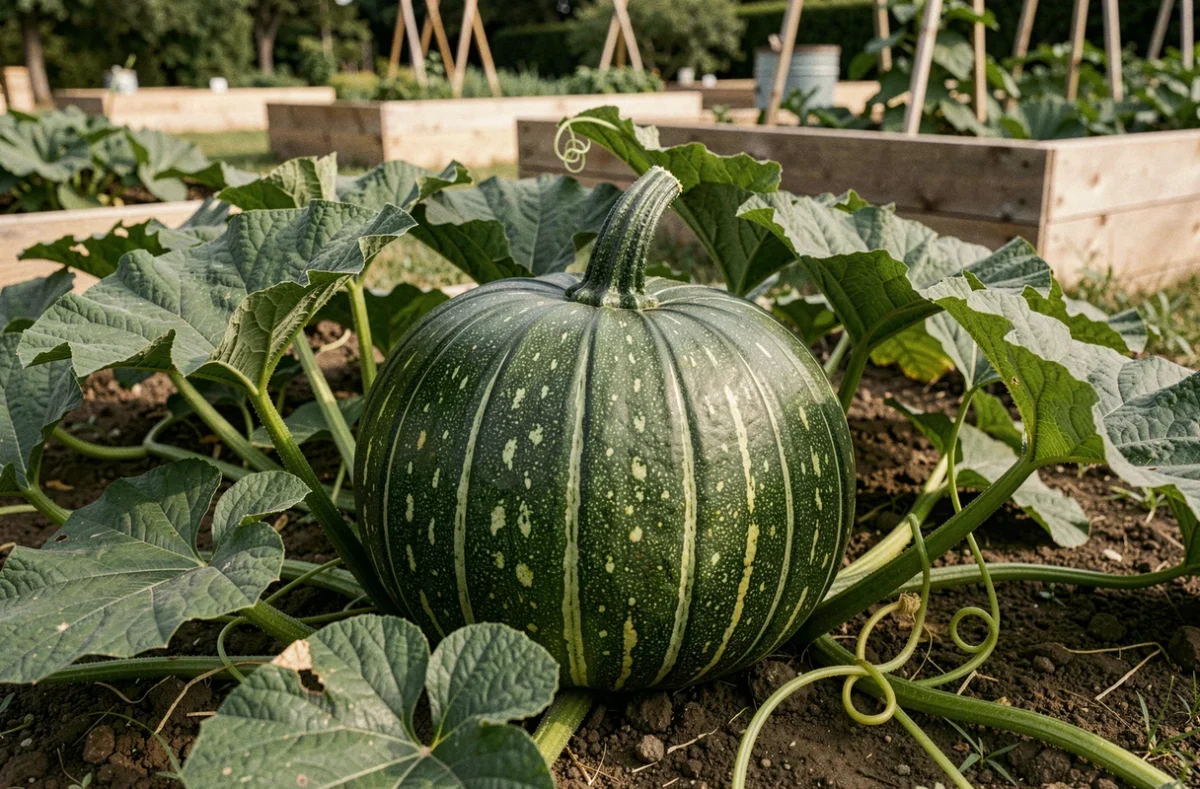
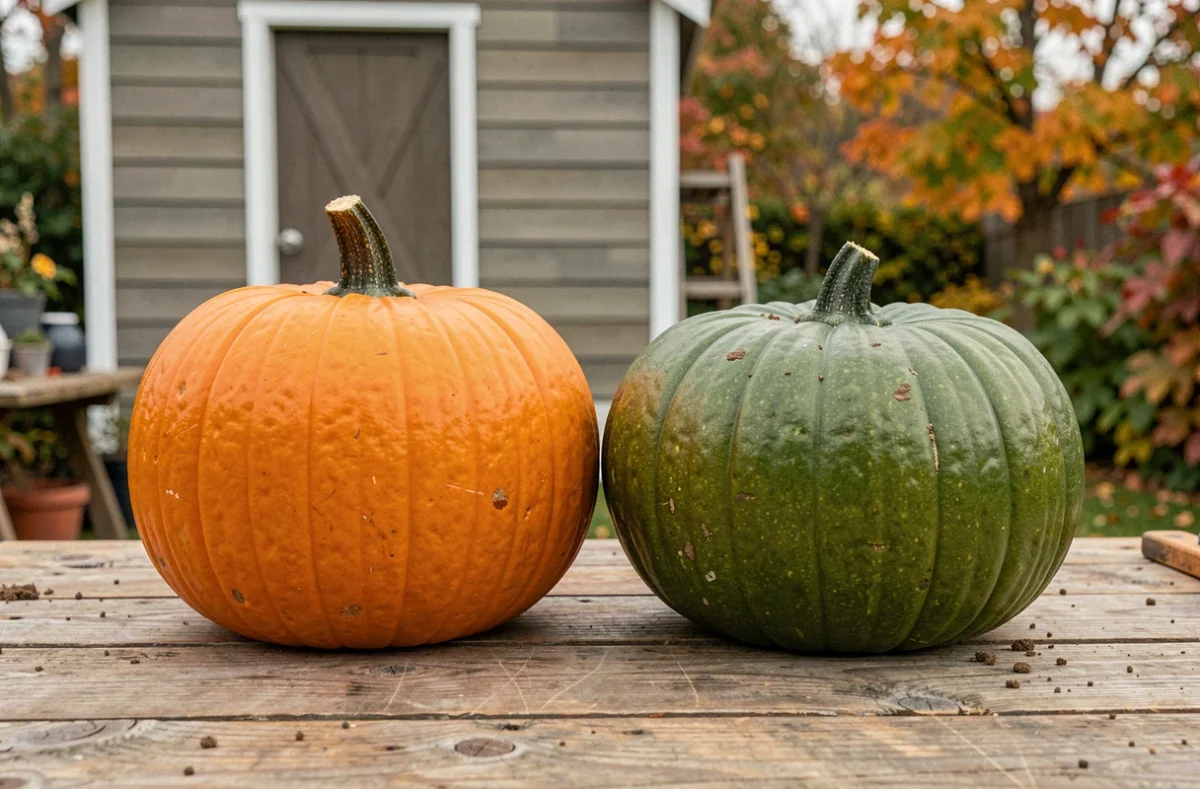
Your pumpkin displays a bright green color when you were expecting a beautiful bright orange. Before you worry, know that green color is not always a sign of a problem. Some varieties of squash remain green at full maturity, and the shade depends as much on the plant’s genetics as on the growing conditions in the garden.
Pumpkin Variety and the Natural Color of the Fruit
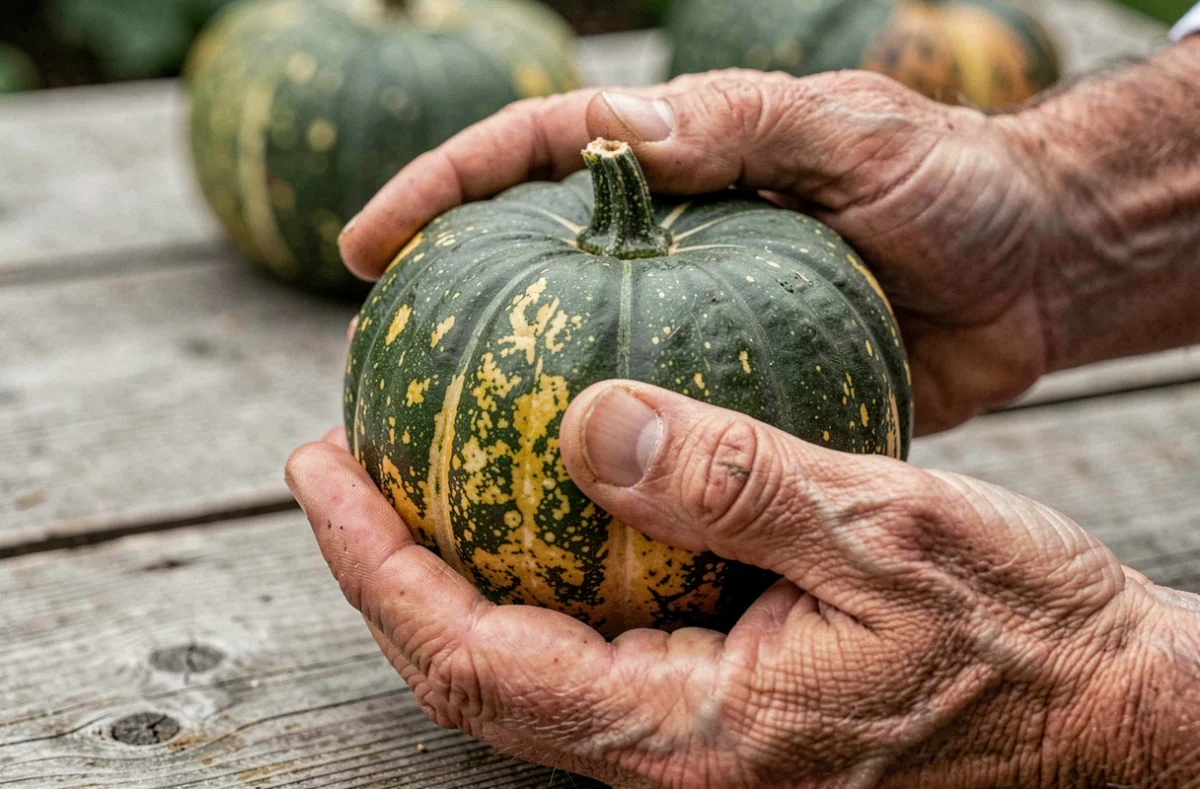
Have you noticed that not all winter squashes turn orange? That’s normal. Cucurbits encompass dozens of cultivars, and the adult color varies from one variety to another. Some pumpkins retain a dark green, light green, or bicolored skin even when perfectly ripe.
The most reliable reflex is to check the name of the variety sown and compare the fruit to the description on the seed packet or catalog. If the variety is supposed to produce an orange fruit and yours remains green, then other factors come into play.
When you seek to understand the reasons for a green pumpkin, the very first question to ask is about the variety being grown.
Green Pumpkin in the Garden: The Role of the Bloom Calendar
A fruit that remains green is often a fruit that hasn’t had enough time to mature. According to data from Utah State University Extension, a pumpkin takes about 45 to 55 days after flowering to reach maturity. Not after sowing, but after flowering.
This distinction changes everything. If your female flowers appeared late (due to a cold spring or delayed sowing), the fruit may not have time to mature before the first autumn frosts.
How to Identify Female Flowers
The female flower is recognizable by a small swelling at its base, an embryo of fruit. Note the date these flowers open. You will then know when to expect a colored and ripe fruit.
If you find that flowering occurred too late in the season, there’s no need to force nature. It’s better to plan for the following year by sowing earlier, under cover if necessary, to gain a few weeks.
Exposure, Soil, and Heat: Conditions That Slow Maturation
Even with an orange variety and a correct calendar, the pumpkin can remain green if the growing conditions are not met. Three factors weigh heavily.
- Direct sunlight: pumpkins need long hours of sun to synthesize the pigments responsible for orange coloration. A shaded or partially shaded location significantly hinders color change.
- Soil warmth: cool or poorly drained soil limits root activity and slows the entire plant cycle. Squash thrive in warmed soil, ideally amended with well-decomposed compost.
- Excess watering at the end of the season: too much water when the fruit should be maturing keeps the plant in a vegetative growth phase instead of concentrating its energy on fruit maturation.
If your garden checks several of these boxes, the pumpkin will take longer to leave its green hue, or may not achieve it before the end of the season.
Should the Fruit Be Exposed to the Sun?
A common reflex is to remove the leaves around the fruit to expose it to the sun. This is risky. The leaves protect the skin from sunburn, even on a green fruit. Removing healthy foliage can cause white spots or lesions on the skin. Preserve the plant cover and let the plant manage the maturation.
Recognizing the Maturity of a Still Green Pumpkin
Color is just one clue among others. Before harvesting (or waiting), check these elements:
- The stem: when it becomes dry, corky, and slightly cracks, the fruit is approaching maturity, regardless of its color.
- The firmness of the skin: press with your nail. If the skin resists and does not scratch easily, the fruit has hardened enough.
- The sound: tap the pumpkin. A hollow sound indicates a full and ripe fruit. A dull sound suggests that the flesh is still waterlogged.
A pumpkin with a dry stem and hard skin can be harvested even if it remains partially green.
The Curing Technique After Harvest
After harvest, a pumpkin can still change color if placed in a warm, dry location for one to two weeks. This step, called curing, also helps harden the skin and extend shelf life. Set the fruits in a well-ventilated space, protected from frost, without stacking them.
Curing only works if the fruit had reached a sufficient stage of maturity at the time of harvest. An extremely immature fruit will remain green and will not develop the expected flavor.
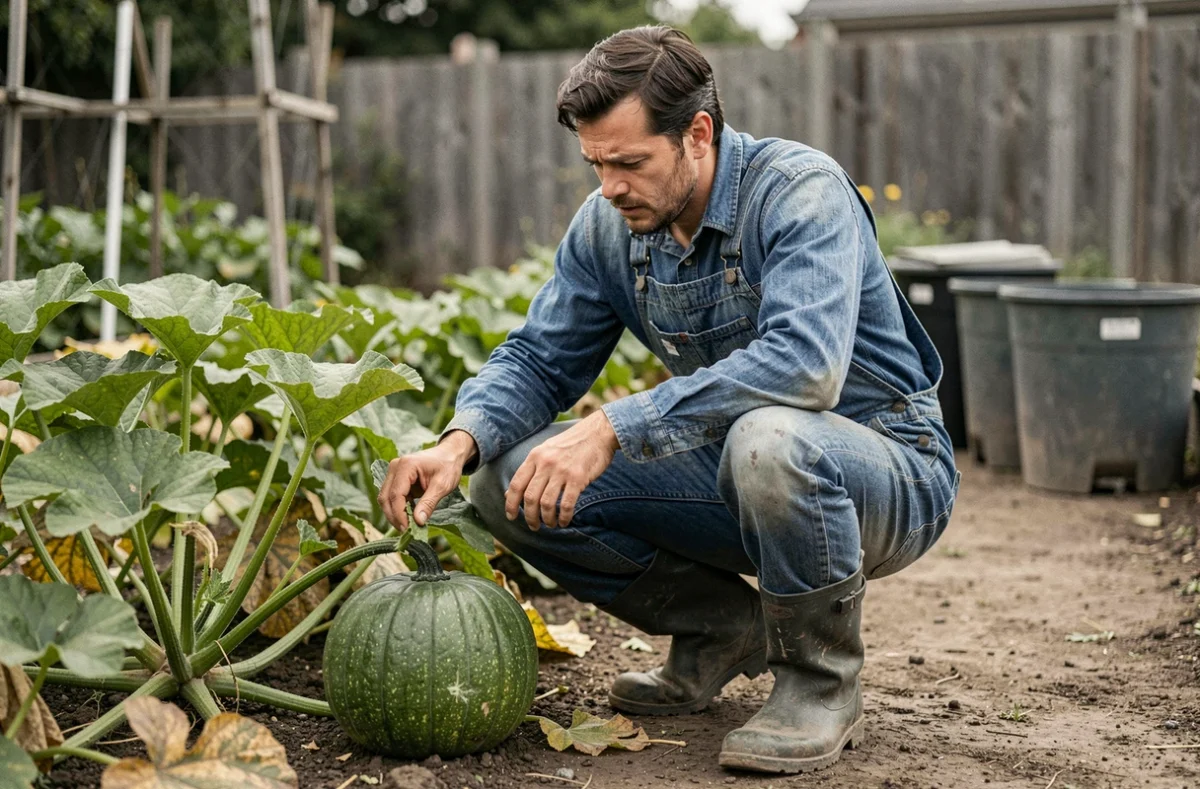
A green pumpkin in the garden does not necessarily call for urgent intervention. First, check the variety. Count the days since flowering. Observe the stem and the hardness of the skin. The most common diagnosis remains a lack of time or heat, two elements on which you can act starting next season by adjusting your sowing dates and the choice of location in the garden.