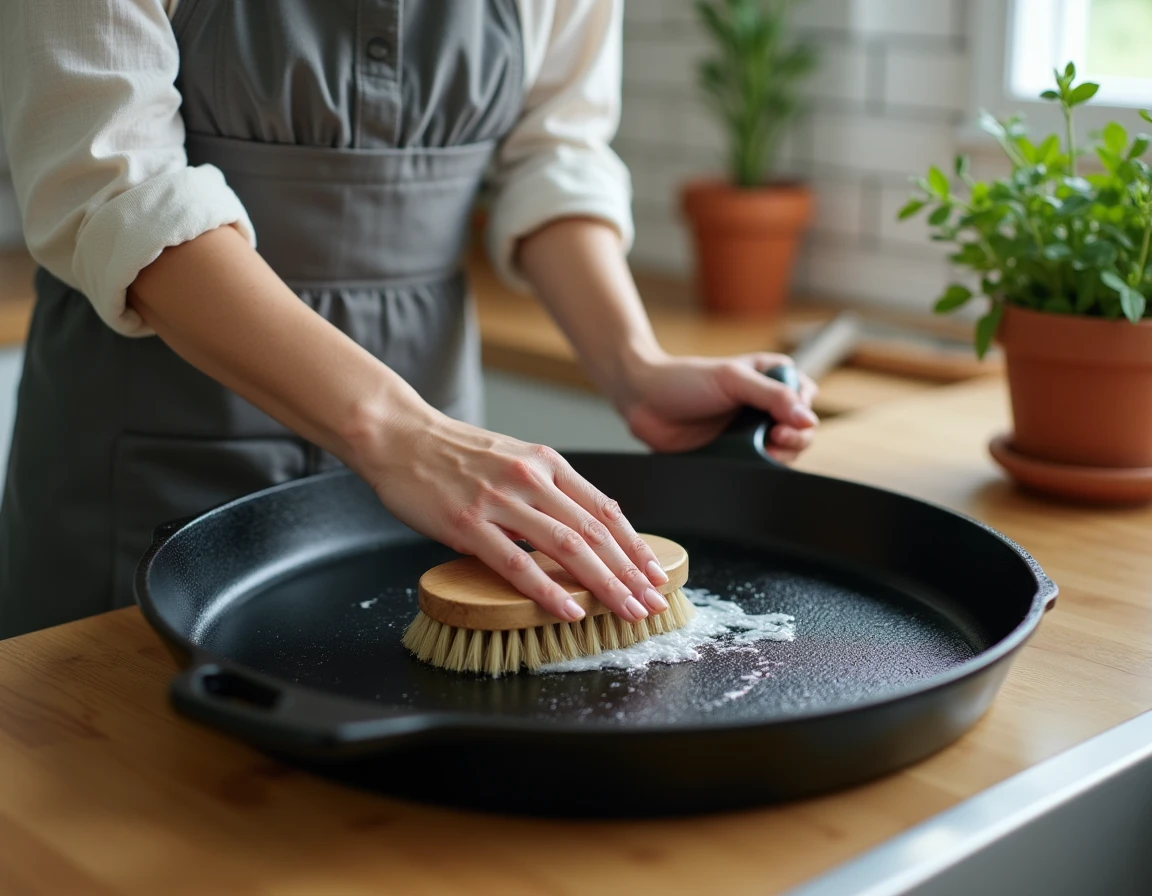
Cleaning an enameled cast iron plancha is not just about scraping a hot surface with a spatula. The choice of timing, product, and technique directly affects the effort required and the condition of the plate after several seasons of use. This article compares cleaning approaches based on their effectiveness on enameled cast iron, a material that should not be treated like stainless steel or rolled steel.
Enameled cast iron vs stainless steel and steel: how the material changes cleaning
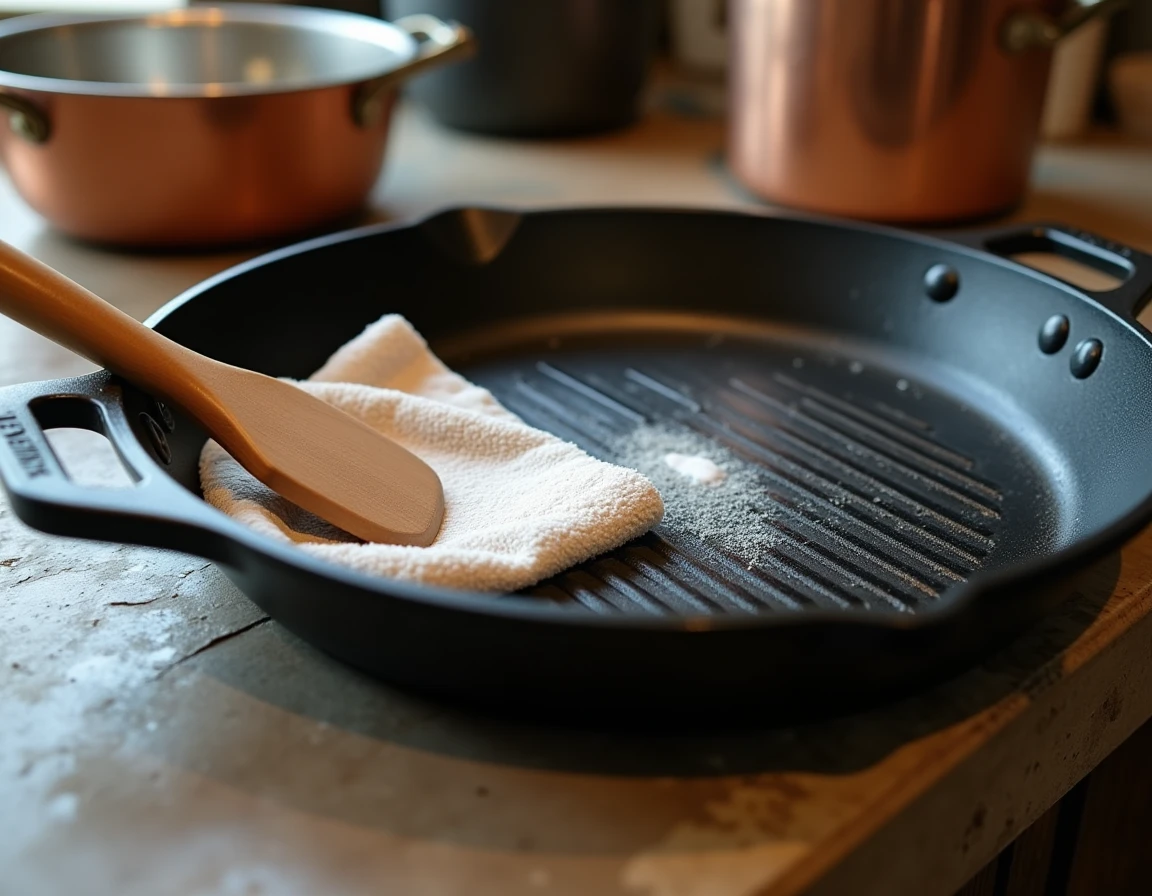
Most cleaning guides treat all planchas the same way. Enameled cast iron has properties that change the method to follow.
| Criterion | Enameled cast iron | Stainless steel | Rolled steel |
|---|---|---|---|
| Scratch sensitivity | Low (resistant double enameling) | High (visible marks) | Medium |
| Protective oil film after cleaning | Not recommended | Recommended | Recommended (anti-rust) |
| Usable stainless steel spatula | Yes, no risk to the enamel | With caution | Yes |
| Abrasive product (like white stone) | Avoid | Usable occasionally | Avoid |
| De-icing with ice cubes | Effective (thermal shock well tolerated) | Effective | Risk of deformation |
The most commonly missing information in tutorials concerns the final oiling. On a stainless steel plate, a light film of oil after cleaning protects the surface. On enameled cast iron, this oil film is not recommended: the enamel already forms a barrier against oxidation. Applying oil creates a sticky layer that traps dust and complicates the next cleaning.
This table helps filter generic advice. When a guide recommends systematic oiling, it refers to stainless steel or steel, not enameled cast iron. To delve into each step suitable for this material, a guide for cleaning an enameled cast iron plancha details the complete procedure.
Hot de-icing: ice cubes, warm water, or white vinegar

Hot cleaning remains the most effective method on enameled cast iron. The principle relies on thermal shock: cooking residues, still soft, detach upon contact with water or ice poured onto the hot plate.
Three variants exist, and their effectiveness varies depending on the type of residue.
Ice cubes directly on the plate
Ice cubes create a localized thermal shock. The steam produced lifts the caramelized juices. This technique works particularly well on sweet residues (marinades, grilled vegetables) that adhere strongly to the cast iron.
Enameled cast iron tolerates this thermal shock well due to the thickness of the plate and the enamel layer. Pouring ice cubes by area and scraping immediately with a stainless steel spatula yields better results than covering the entire surface at once.
Warm water poured gradually
Warm water is suitable for classic greasy residues (meats, fish). It softens the fats without causing violent splashing. This approach is safer when the plate is very hot.
Diluted white vinegar
White vinegar acts on limescale deposits and protein residues. At the end of the season, when the plate shows whitish stains from tap water, a pass with diluted white vinegar after the classic de-icing eliminates these marks without attacking the enamel.
Common mistakes on enameled cast iron: products and accessories to avoid
The enamel protects the cast iron, but it cannot withstand everything. Some common reflexes on other surfaces damage this finish.
- White stone or abrasive powder: these products create micro-scratches in the enamel. On stainless steel, the effect remains cosmetic. On enameled cast iron, micro-scratches expose the raw cast iron underneath, which opens the door to rust.
- Carbon steel scraper or steel wool: too aggressive for the enamel, they also leave metallic particles that rust upon contact with moisture.
- Industrial degreasing products (like oven cleaners): their very alkaline pH attacks the enameled coating over time. A classic soapy water is sufficient after scraping.
- Pressure washer: direct pressure on the enamel can cause micro-cracks, especially if the plate is still hot.
The stainless steel spatula remains the reference accessory. On a double-pass enameled cast iron, it does not scratch the surface, even when used forcefully. This is a notable advantage of this material compared to stainless steel, where the spatula leaves visible marks.
Complete cleaning sequence after cooking on enameled cast iron
The sequence of actions is as important as the choice of products. Here is the sequence that preserves the enamel while eliminating residues.
- Plate still hot: pour ice cubes or warm water by area, then scrape the detached residues with a stainless steel spatula towards the grease tray.
- Second pass: apply soapy water (classic dish soap) with a non-abrasive sponge, scrub the still stained areas.
- Rinse with clear water, then wipe completely with a dry cloth or paper towel.
- Do not oil the plate after drying: leave the enamel bare, without a greasy film.
This three-step sequence (de-icing, washing, drying) takes a few minutes if done right after cooking. Waiting for the plate to cool completely multiplies the cleaning time, as the residues harden and adhere to the enamel.
Special case: cooled plate with ingrained residues
If the plate has cooled before cleaning, it must be reheated to a moderate temperature before resuming de-icing. Scraping a cold plate with dry residues puts stress on the enamel and risks chipping the coating on the edges of the plate.
End-of-season maintenance: protecting enameled cast iron during storage
Regular cleaning is not enough to ensure the longevity of the plate. Before prolonged storage, more thorough maintenance is required.
After a final complete cleaning, applying white vinegar over the entire surface removes mineral deposits accumulated during the season. Storing the plancha in a dry place, covered plate, prevents condensation that could reach the cast iron if the enamel has any micro-cracks.
The grease tray and chassis also deserve cleaning at the end of the season. The fats accumulated in the tray go rancid and attract insects. A wash with hot soapy water, followed by complete drying before storage, is sufficient.
Enameled cast iron does not rust as long as the enamel remains intact. The entire maintenance strategy aims to preserve this protective layer, making abrasive products and oiling much more problematic than on other plate materials.