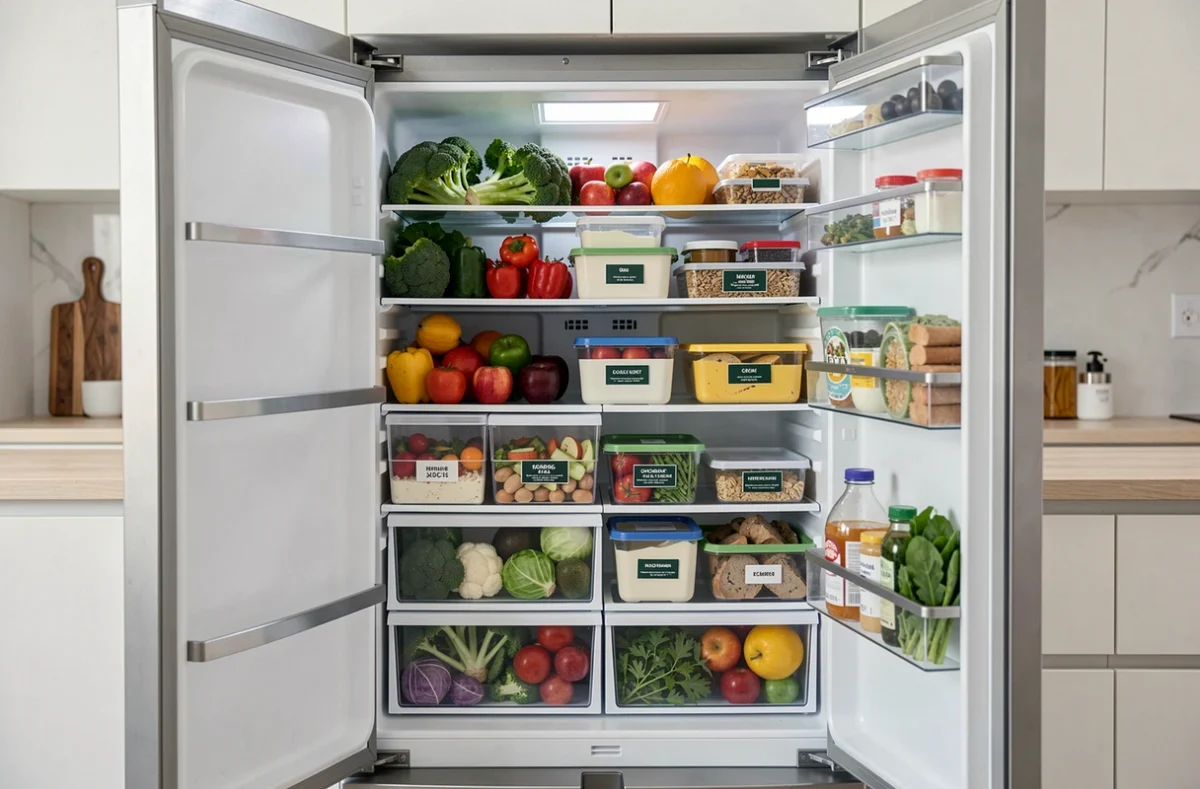
A poorly chosen or poorly used refrigerator degrades the quality of food well before its expiration date. The type of cooling, the climate class, and the management of internal zones determine both food safety and energy bills. We review the technical parameters that make a difference on a daily basis.
Static, forced, or ventilated cooling: real impact on food preservation
Static cooling relies on natural convection: cold air descends, warm air rises. This operation creates significant temperature differences between the top and bottom of the appliance, sometimes more than a few degrees. For a static refrigerator, the placement of food by thermal zone is not optional; it is the basic condition for proper preservation.
Forced cooling adds an internal fan that homogenizes the temperature without completely eliminating the differences. We recommend this system for households that frequently open the door: the temperature rise after opening is significantly faster in static models.
Ventilated cooling (No Frost) circulates dry, cold air throughout the entire compartment. Frost formation is almost eliminated, which removes the hassle of defrosting. In return, ventilated cooling dries out unwrapped food.
Leafy vegetables, soft cheeses, and uncovered preparations degrade faster. If you opt for a ventilated model, the systematic use of airtight containers or food wraps becomes a technical imperative, not just a simple storage tip.
A comprehensive guide to different refrigeration technologies is available on Mon Frigo, with detailed comparisons by type of appliance.
Durability index and spare parts: choosing a refrigerator that lasts
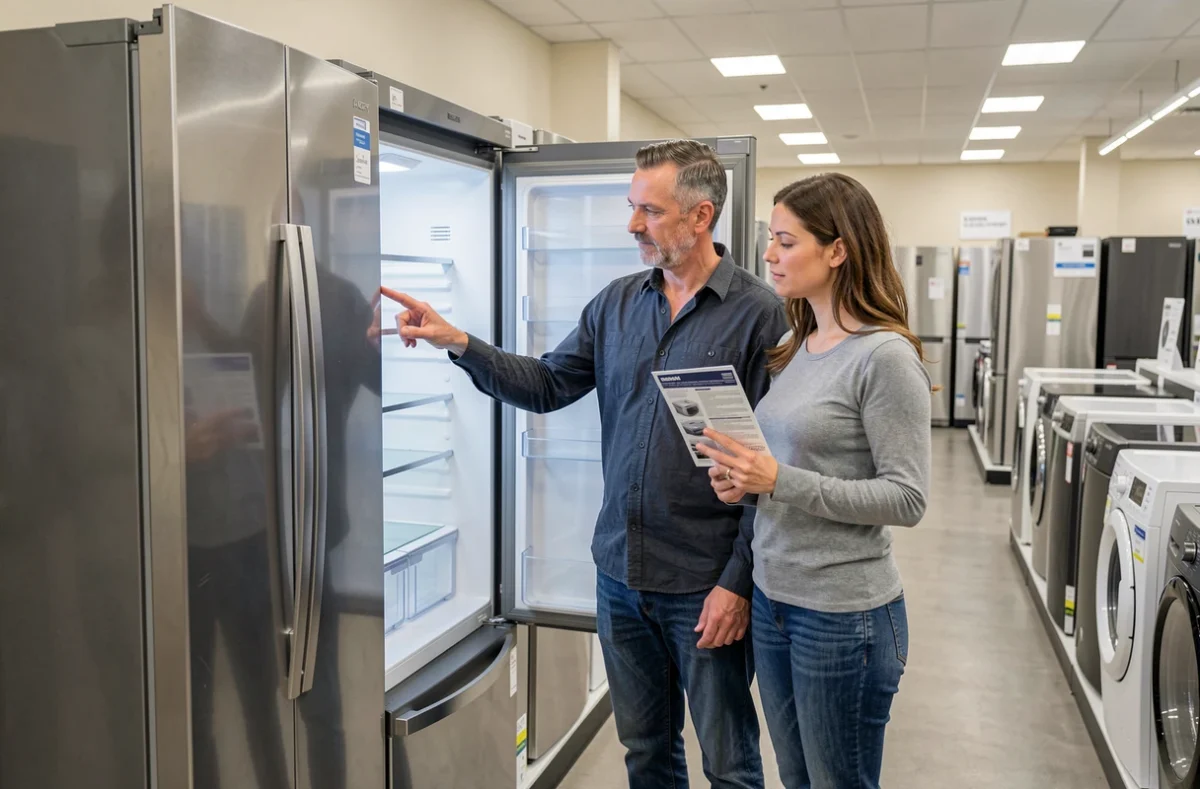
The energy label is no longer sufficient to guide a purchase. Since decree n° 2024-316 and the orders of April 5, 2024, the durability index has gradually replaced the reparability index for certain categories of equipment. It does not necessarily cover all refrigeration appliances. Check separately the consumption, availability of parts, and ease of repair rather than assuming that a good overall rating guarantees an energy-efficient appliance.

The European ecodesign framework requires manufacturers of certain refrigeration appliances to make spare parts available for a minimum duration after the model is discontinued. Specifically, before purchasing, we recommend checking on the manufacturer’s website:
- The list of available spare parts (door seal, thermostat, electronic board, compressor) and their indicative prices
- The duration of the commitment to availability of parts after the end of the series
- The existence of accessible technical documentation for an independent repairer
A refrigerator whose door seal or thermostat is no longer available after five years ends up in the landfill, regardless of the energy class displayed at purchase.
Thermostat adjustment: why the actual cold zone differs from the display
Most refrigerators display a set temperature, not the actual temperature measured in each zone. On a static model set to 4 °C, the coldest zone (usually at the bottom, above the vegetable drawer) can drop significantly below that, while the upper part remains warmer.
An independent thermometer placed in the cold zone remains the only reliable way to check the effective temperature. Built-in probes often measure the ambient air temperature of the compartment, not that in contact with the food.
The vegetable drawer poses a specific problem. An expert from Anses pointed out that this compartment is not always the safest zone for sensitive foods. Humidity is higher there, which promotes certain microbial developments. Meats and fish do not belong there, even if the temperature seems correct.
Refrigerator maintenance: frost, seals, and condenser
Everyone knows about cleaning shelves with white vinegar. Here, we focus on maintenance points that directly affect the appliance’s performance.
Frost significantly increases electricity consumption. A layer of frost, even thin, on the internal walls of a static model acts as thermal insulation. The compressor runs longer to maintain the set temperature. On a non-No Frost model, regular defrosting (as soon as the layer exceeds a few millimeters) preserves energy efficiency.
The door seals can be checked with a simple test: slide a piece of paper between the seal and the body, then close the door. If the paper slides out easily, the seal is no longer making proper contact. An air leak at this level causes continuous overconsumption and temperature instability in the compartment.
The condenser (black grille at the back or underneath the appliance) accumulates dust. A dirty condenser reduces heat dissipation capacity and forces the compressor to work harder. Vacuuming it twice a year is sufficient, but this is a gesture that most users overlook.
- Check the door seals at the change of seasons
- Dust the condenser at least twice a year
- Defrost a static model as soon as the frost exceeds a few millimeters in thickness
- Check the actual temperature with an independent thermometer after each thermostat adjustment
Internal organization: stock rotation before zone-based storage
Competing guides extensively detail which shelf holds which food. We observe that the main issue is not placement but rotation. A properly placed food item but forgotten at the back of the refrigerator ends up wasted, regardless of the zone.
The FIFO principle (first in, first out) applies to the refrigerator just as it does in collective catering. When putting away groceries, products with the nearest expiration date should be placed at the front, with new purchases behind. This gesture takes a few seconds and reduces waste much more effectively than organizing by food category.
For opened products, removing the original cardboard packaging (yogurts, dessert creams) frees up space and improves cold air circulation around the pots. This practice, recommended by several specialized sources, also allows for quicker identification of products to be consumed first.
A well-maintained and properly adjusted refrigerator protects food. A well-organized refrigerator prevents food from being thrown away. The two dimensions complement each other, and neither compensates for the other.